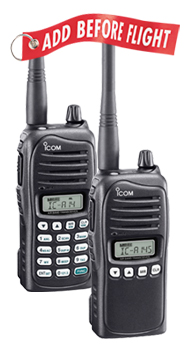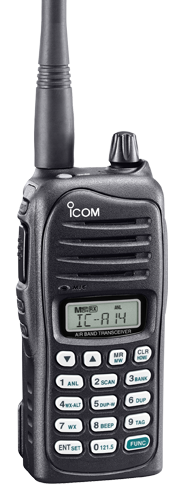
It is easy to take two-way VHF communication for granted until you don’t have it. Lucky for us, there are many handheld radios available for use as a backup way to stay in touch with ATC after a com failure, or to get in touch with help when you find yourself on the ground.
We used to call handhelds “bricks that talk” when I was in the airline world. If you were on the ramp and needed to summon maintenance people, the fastest way was to find a ground worker with a brick that talked.
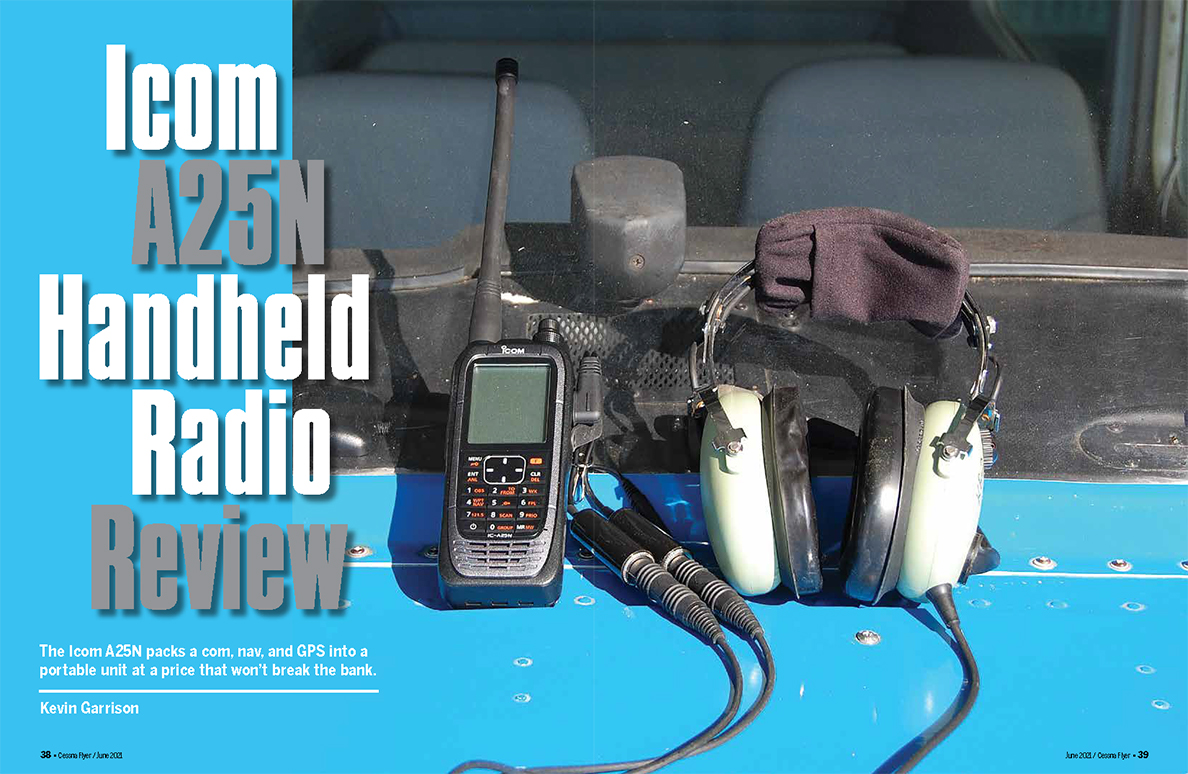
I recently acquired an Icom A25N as my personal “brick,” and I love it. The unit has an easy-to-use keyboard and a huge screen that makes my aged eyes work a little less hard when I am trying to program and view the radio in the very common turbulence we General Aviation airplane drivers encounter on almost every flight.

 Even so, it wasn’t long before a few started showing up with Icom aviation radios beginning in 1985 with the
 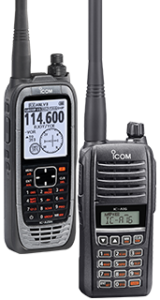 The demand for our radios grew and we obliged our customers with the
 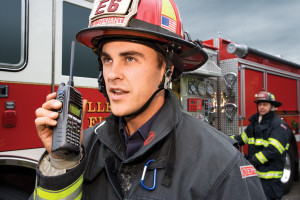 In the real world, emergencies occur outside of cell coverage. Emergencies trigger people to call their loved ones to check on their safety. As impressive as cell phones are, when emergencies arise, their signal is often unreliable and can become overloaded, making it a poor form of communication.